Introduction
The global trade of industrial chemicals is a cornerstone of modern industry, driving production in glass, textiles, detergents, agriculture, and countless other sectors. Businesses engaged in the import and export of industrial chemicals, especially in regions like the Middle East and Asia, must operate within a well-defined regulatory framework. For companies such as Janah Alamal Basic Industrial Chemicals Trading L.L.C., based in Dubai with strong ties to international markets, compliance with import and export regulations is not just a legal requirement but a competitive advantage.
This article explores the critical regulations surrounding the import and export industrial chemicals sector, highlighting examples of products from janahalamalchem.com such as Soda Ash Light (99.2%), Acetone Industrial Grade (99%), Calcium Carbonate (98%), Caustic Soda Flakes (99%), Sulphur, and other basic industrial compounds.
The Importance of Regulations in Chemical Trade
Regulations exist to balance global trade opportunities with health, safety, and environmental protection. Industrial chemicals are powerful economic drivers, but improper handling or uncontrolled trade can lead to accidents, environmental harm, or misuse. For this reason, governments and international bodies enforce strict measures.
Key reasons for chemical trade regulations include:
- Environmental protection: Preventing soil, air, and water contamination.
- Worker and consumer safety: Ensuring chemicals are labeled, stored, and transported safely.
- Fair competition: Preventing dumping of low-cost hazardous materials in vulnerable markets.
- Security measures: Controlling substances that could be misused for harmful purposes.

International Regulatory Framework
The import and export of industrial chemicals is influenced by multiple international agreements and standards:
- REACH (Registration, Evaluation, Authorization, and Restriction of Chemicals – EU)
REACH regulates chemicals entering the European Union market. Exporters from Dubai or Asia targeting Europe must register products like soda ash or resins, providing safety data sheets and demonstrating safe use. - Globally Harmonized System (GHS)
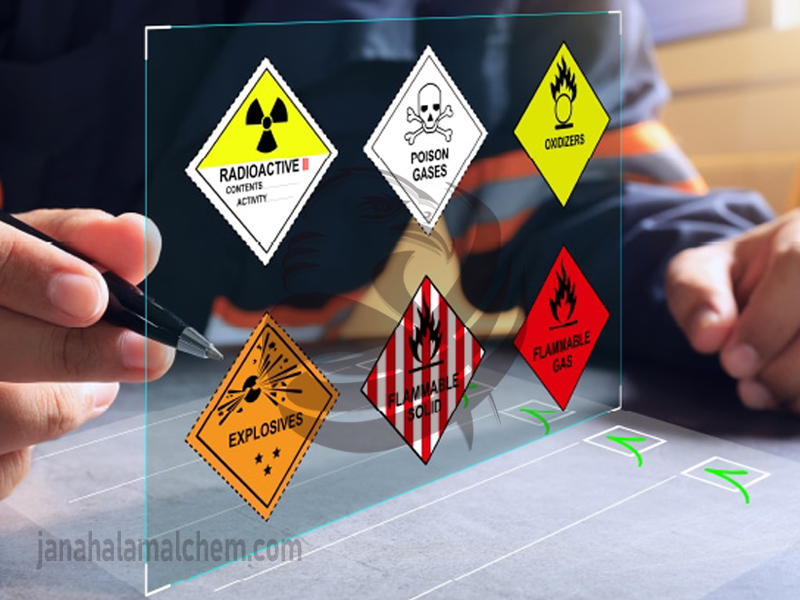
This system standardizes chemical classification and labeling worldwide. Companies like Janah Alamal must ensure all products, such as sulphur or sodium carbonate, are packaged and labeled with hazard symbols, safety instructions, and handling guidelines. - Rotterdam Convention
Covers prior informed consent for the international trade of hazardous chemicals and pesticides. Though products like soda ash are generally safe, more reactive chemicals require notification and compliance. - Basel Convention
Governs the movement of hazardous wastes. Exporters must ensure that industrial chemical by-products do not fall under this category without proper authorization.
UAE Import and Export Regulations
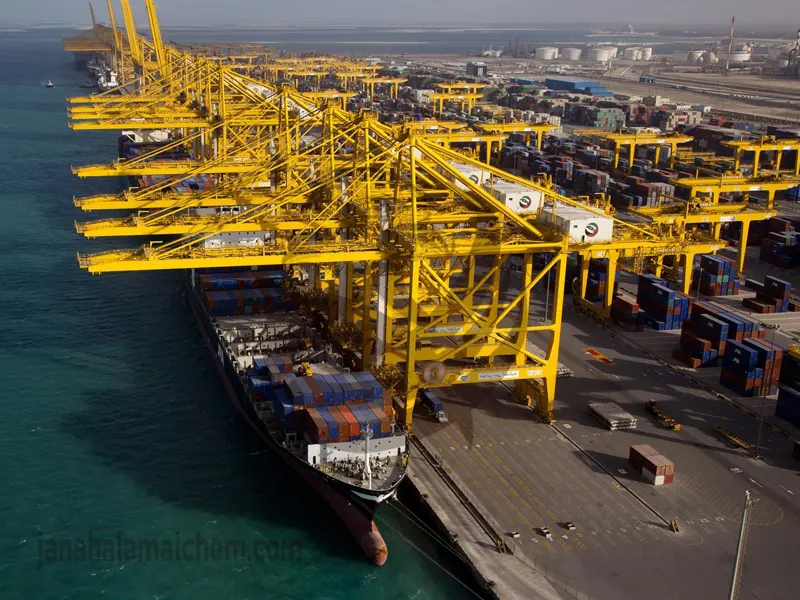
Dubai, being a global trade hub, has its own stringent frameworks to regulate import and export industrial chemicals:
- Licensing: Companies such as Janah Alamal must hold a commercial license under chemical trading activities to legally import/export.
- Customs Declarations: Each shipment must be documented with Harmonized System (HS) codes, safety certificates, and origin details.
- Hazardous Material Control: Special permits are needed for products classified as hazardous, including some sulphur compounds.
- Free Zone Advantages: Trading chemicals through Dubai’s free zones often reduces tariffs and expedites re-export processes.
Import Procedures
When importing industrial chemicals into the UAE or other regional markets, businesses follow these steps:
- Pre-Approval & Documentation
Submission of product safety data sheets (MSDS), registration of chemicals with local authorities, and commercial invoices. - Customs Clearance
Payment of duties, classification under HS codes, and inspection by customs authorities. - Quality & Compliance Checks
Samples may be taken to ensure compliance with environmental and health standards.
For example, importing Soda Ash Light (99.2%) into Dubai requires HS code classification under alkali carbonates, submission of MSDS, and confirmation of purity.
Export Procedures
Exporting industrial chemicals follows similar but destination-specific requirements:
- Export Declaration
Filing of documents with Dubai Customs, including the commercial invoice, packing list, and certificate of origin. - Destination-Specific Regulations
Exporting Sulphur granules to India requires compliance with Indian Bureau of Standards, while shipping to Europe mandates REACH registration. - Transportation Regulations
Chemicals are often transported in bulk containers, requiring adherence to International Maritime Dangerous Goods (IMDG) code for sea freight.
Key Product Examples from Janah Alamal
- Soda Ash Light (99.2%)
Widely used in glass, detergent, and textile industries. Requires proper packaging to avoid moisture absorption and strict labeling under GHS standards. - Sulphur Granules (99.8%)
Exported in bulk for fertilizers, chemical processing, and industrial applications. Sulphur transport is regulated due to flammability risks. - Acetone Industrial Grade (99%)
Essential for adhesives, coatings, and plastics. Resins often fall under restricted chemical categories, requiring registration and classification. - Calcium Carbonate (98%)
A core industrial raw material, calcium carbonate imports into the UAE require customs documentation and proof of industrial usage.
Challenges in Import and Export of Industrial Chemicals
- Regulatory Variations: Each destination country has unique compliance frameworks.
- Documentation Overload: Exporters must maintain updated MSDS, REACH certifications, and certificates of analysis.
- Transportation Risks: Chemicals like sulphur are sensitive to temperature and require controlled logistics.
- Trade Barriers: Tariffs and non-tariff barriers can increase costs for businesses.
Opportunities for Companies Like Janah Alamal
Despite challenges, global demand for industrial chemicals continues to grow. Companies that master regulatory compliance can:
- Build stronger reputations as safe and reliable partners.
- Expand markets across Europe, Asia, and Africa.
- Benefit from Dubai’s position as a global re-export hub.
By focusing on compliance and transparency, Janah Alamal can stand out as a trusted leader in the import and export industrial chemicals market.
Conclusion
The trade of industrial chemicals is a complex but rewarding field. From soda ash and sulphur to calcium carbonate, each product requires strict adherence to international and local import/export regulations. For companies like Janah Alamal Basic Industrial Chemicals in Dubai, understanding and navigating these rules is essential for long-term success.
By aligning operations with global standards such as REACH and GHS, while also complying with UAE’s licensing and customs frameworks, chemical traders can expand their reach confidently. The keyword focus on import and export industrial chemicals not only strengthens search visibility but also reflects the very essence of this thriving business.